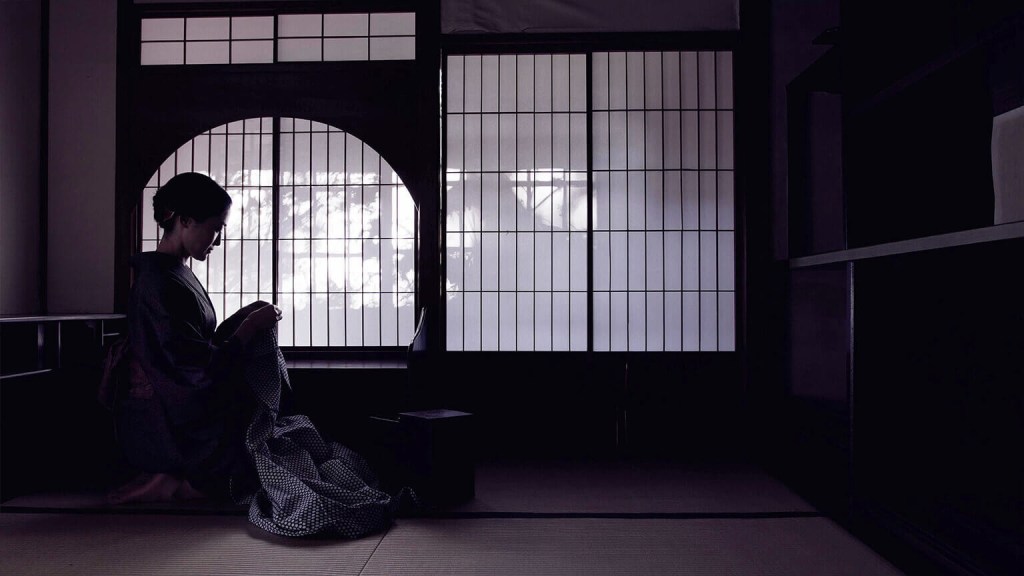
Several years ago, I picked up In Praise of Shadows, an essay by Japanese author Jun’ichirō Tanizaki. At the time, I couldn’t grasp its significance, but the opening passages lingered with me.
The essay begins with Tanizaki’s musings on the difference between Western and Eastern aesthetics, particularly focusing on the beauty found in shadows and the subtle interplay of light and darkness in Japanese architecture. He reflects on traditional homes, the soft glow of paper lanterns, and the muted tones of woodwork.
When I first read the essay, it felt distant from my understanding of the world. Now, it feels more relevant than ever. As our world lurches from chaotic event to chaotic event – its nice to focus on Tanizaki’s ideas around caring about the simple things, the small beauties of our environment, and the ways of seeing through the darkness.
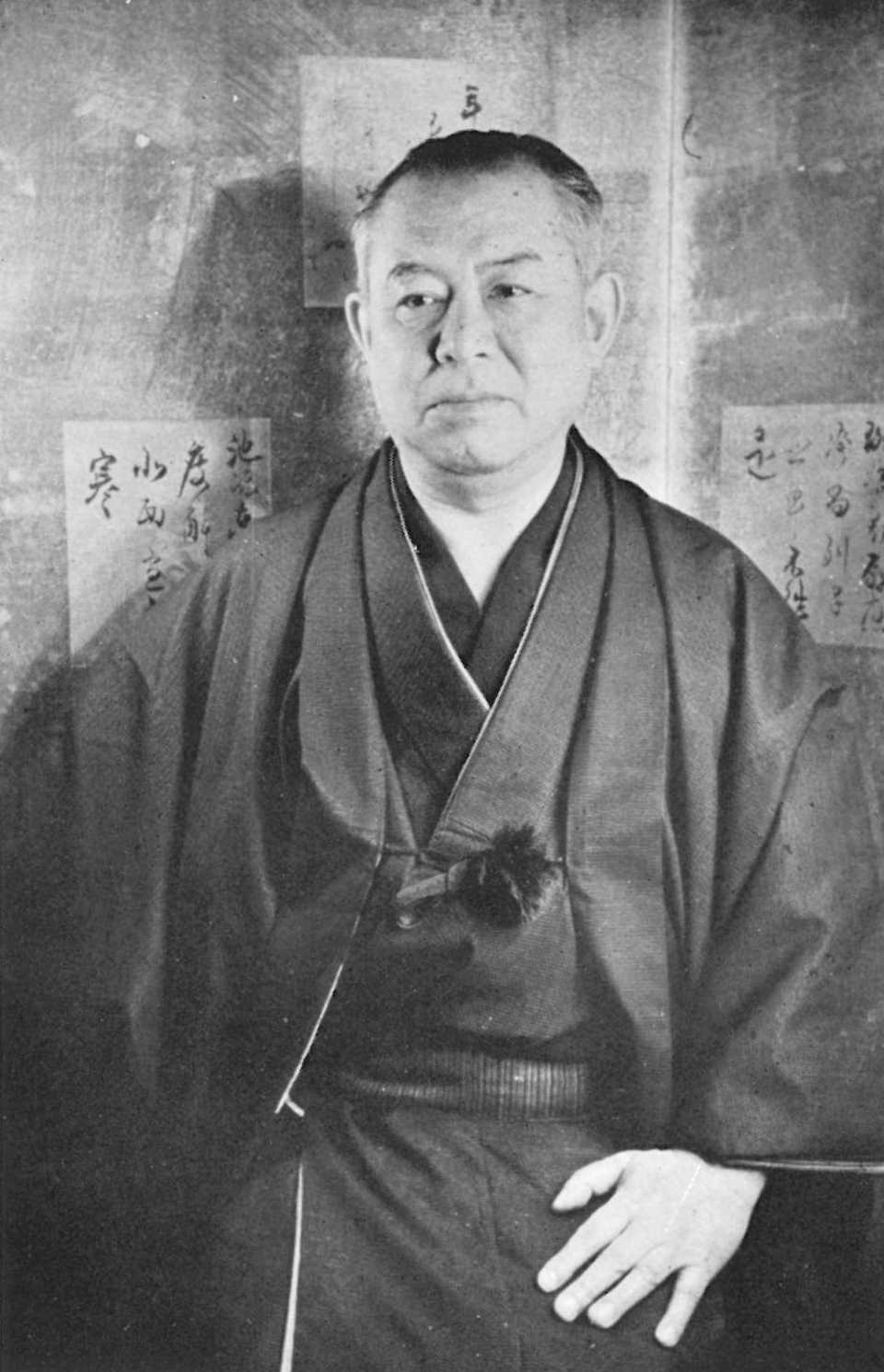
This is the world of Jun’ichirō Tanizaki
Tanizaki has a masterful way of evoking atmosphere with his words. His prose is imbued with sensory details—the sight of a flickering candle, the sound of rustling silk, and the smell of incense burning in a dimly lit room. When he writes about a traditional Japanese home, I am immediately transported there. I see the soft shadows. I feel the quiet atmosphere. I experience the world through his eyes.
And how different it looks in that moment.
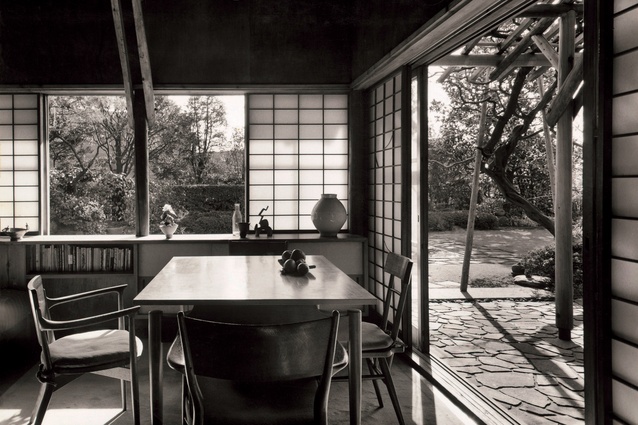
Whenever I see the alcove of a tastefully built Japanese room, I marvel at our comprehension of the secrets of shadows, our sensitive use of shadow and light. For the beauty of the alcove is not the work of some clever device. An empty space is marked off with plain wood and plain walls, so that the light drawn into its forms dim shadows within emptiness.
There is nothing more. And yet, when we gaze into the darkness that gathers behind the crossbeam, around the flower vase, beneath the shelves, though we know perfectly well it is mere shadow, we are overcome with the feeling that in this small corner of the atmosphere there reigns complete and utter silence; that here in the darkness immutable tranquillity holds sway.
If there is a quintessential Tanizaki argument, it is in the deliberate contrasts he explores between absence and presence. His works features the distinction between modernity and tradition, the haunting of the old world against the brashness of the new; the depth found in the simple and the unadorned; and the changes of time that shift our perspectives and culture.
The essay conveys a quiet yet intense appreciation for the mundane and the everyday. This includes a reaction against the encroachment of Western architecture, the invasion of electric lights, or the relentless pace of modernization. Much of the essay focuses on a distinction between Eastern and Western culture. In the opening, he writes that Japanese culture has its own unique appreciation for absence, contrasting this against the Western ideal of constant, never-ending upward progress:
We tend to seek our satisfactions in whatever surroundings we happen to find ourselves, to content ourselves with things as they are; and so darkness causes us no discontent, we resign ourselves to it as inevitable. If light is scarce, then light is scarce; we will immerse ourselves in the darkness and there discover its own particular beauty.
But the progressive Westerner is determined always to better his lot. From candle to oil lamp, oil lamp to gaslight, gaslight to electric light—his quest for a brighter light never ceases, he spares no pains to eradicate even the minutest shadow.
This was 1933 in Japan, a country which had yet to undergo the radical transformation and acceleration experienced in the ensuing decades. Sixty years later, Japan would be the epitome of the “Western” culture that Tanizaki describes. In the 1980s and 90s, Japan was the centre of technological innovation and progress, the heart of the robotics movement, and the push towards modernization and futuristic technological developments. So much so, that it inspired popular sci fi films like Bladerunner.
It was hardly the dark, candle-lit place that Tanizaki describes.
At the same time, this cultural distinction between Eastern and Western culture has been repeated. Eastern cultures are often represented in our films and novels as focusing on absence, death and loss, while Western culture is typically stereotyped as focusing on achievement, presence, and accumulation. These ideas can be nestled rather neatly into the history of Western philosophy, which has centred (in the cannon), on what it means to exist, to be, and what it means to live a good life. Byung-Chul Han, in his book Absence, tackles this distinction head on. In promoting the book last year, he wrote:
Western thinking has long been dominated by essence, by a preoccupation with that which dwells in itself and delimits itself from the other. By contrast, Far Eastern thought is centred not on essence but on absence. The fundamental topos of Far Eastern thinking is not being but ‘the way’ (dao), which lacks the solidity and fixedness of essence.
The difference between essence and absence is the difference between being and path, between dwelling and wandering. ‘A Zen monk should be without fixed abode, like the clouds, and without fixed support, like water’, said the Japanese Zen master Dōgen.
Han draws on Tanizaki to emphasise his point – that absence is not just the lack of something, but the presence of something bigger than oneself. “The good wanderer leaves no trace,” he says, quoting Li Bai. This includes the idea that absence, darkness and loss are character-building, or in some sense, shape who we go onto become in our lives.
The world is constantly changing, Tanizaki tells us, but it is in our preservation and appreciation of traditional artwork and architecture, in the shadows of the past, that we can find ourselves.
The quality that we call beauty… must always grow from the realities of life, and our ancestors, forced to live in dark rooms, presently came to discover beauty in shadows, ultimately to guide shadows towards beauty’s ends.
There is still a strong valuing in Japanese culture of tradition, and in particular, of traditional architecture. Modern Japan has faithfully kept in place architectural styles that date back hundreds of years, evoking a past that is seemingly lost to us today. And at the same time, Japanese culture continues to focus on various forms of absence, loss and grief, typified in some of the most popular novels, films and anime available in the West.
The Japanese concept of ma, for example, represents a gap in time or empty space. A pause, in between the action. The Ghibli films often feature ma. That is, characters paused in a particular moment of contemplation or silence, in between the loud edges of the action. This is clearly evident in the popular film Spirited Away, where the protagonist catches a train ride in silence with her ghostly companion.
In this way, the traditional form of Japanese shadow has transformed into the new medium of film, creating the same gap or absence that was there in the past. Although the cultural shift Tanizaki was working against was lost, and Japan has become the modern powerhouse he perhaps feared it would become, it therefore retains at least a semblance of the cultural aesthetic he described.
In the mansion called Kikugetsu-tei, where the four walls are papered with silver paper, the moonlight reflecting in from the garden is soft and faint, so gentle it seems as if it would melt in the mouth.

Josh.


 New Intrigue
Leave a Reply