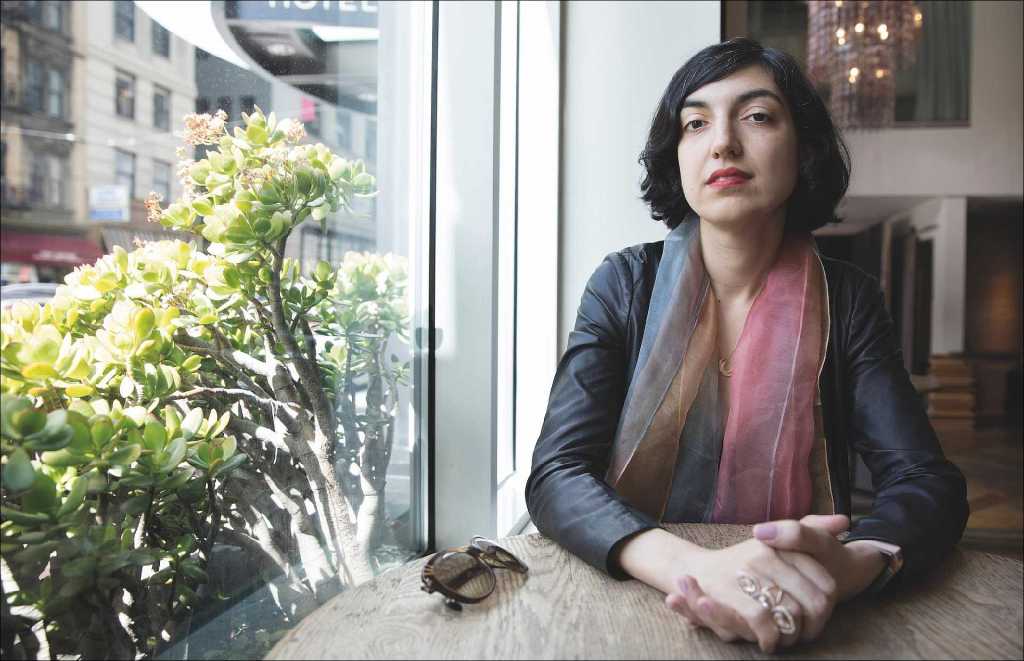
Elif Batuman has become something of a cult figure in certain social circles. A writer who, retrospectively, went back and wrote one of the greatest college novels of all time, a coming-of-age story equal parts philosophy and literature, based loosely on her time at Harvard in the 1990s.
I’m talking of course about The Idiot, a novel not only brimming with passion and interest, but also a finalist for the 2018 Pulitzer Prize for fiction. In 2022, Batuman released the sequel Either / Or, ending some of the narrative threads woven in the original. I read both books last year, in a haze of murky autumn days, on long train rides, unable to put the books down.
The story centres on Selin Karadağ, a freshman studying linguistics at Harvard. It is there that she meets a Hungarian maths student, Ivan, in a Russian language class. The two correspond over email, and sometimes see each other in person. While they both seem romantically interested, neither express their true emotions.
The sequel picks up the story at an ambiguous moment – the relationship still in balance, Selin still young and inexperienced in dating, and grappling with her place in the world. Some coming-of-age novels can be hard to read as we get older, but the depth and clarity of the prose makes these a page-turner in their own way. And the careful balance between prose and philosophy is nothing short of extraordinary.
In the sequel, Selin is caught up reading Either / Or, the famous philosophical text by Søren Kierkegaard. Kierkegaard poses the idea that one can live either aesthetically or ethically, and writes of what each lifestyle would look like. His aesthetic life is wild and precocious, but in some ways, empty. Meanwhile, the ethical life entails certain obligations and responsibilities.
Selin, reading the text, decides to embark on something of an aesthetic adventure. She sets out to do the typical things done in coming-of-age stories: losing her virginity, falling in love, and deciding what to do with her life. Meanwhile, we are bombarded with her thoughts, constantly ringing in our ears:
Everything you want right now, everything you want so passionately and think you’ll never get—you will get it someday.” I accidentally met her eyes, and it felt like she was talking to me. “Yes, you will get it,” she said, looking right at me, “but by that time, you won’t want it anymore. That’s how it happens.
Selin and Ivan’s relationship is the central tension point of the plot, the classic will-they-won’t-they of a romance. The difference here is that the relationship is almost entirely in emails. The two rarely meet. There is so much room for ambiguity in their exchanges; what does one word mean, as opposed to another; does it matter that they are online, or offline? The book hums with these anxieties that so typify that stage of life – the uncertainty that rocks to the core of one’s being.
So too, the feeling of time, slipping away and bursting with life in those young and vulnerable years:
I kept thinking about the uneven quality of time–the way it was almost always so empty, and then with no warning came a few days that felt so dense and alive and real that it seemed indisputable that that was what life was, that its real nature had finally been revealed. But then time passed and unthinkably grew dead again, and it turned out that that fullness had been an aberration and might never come back.
Aside from the philosophical musings, which are worthwhile in and of themselves, the books also feature beautiful prose. Batuman is a master of understatement in her descriptions, pulling out colours and bringing the world to life. I’ve noticed this as a feature of college novels – the changing of the seasons.
Whenever the season changes, the prose latches onto that change, as if it is an extension of the character themselves. Perhaps, this is done to emphasize the shifting nature of one’s personality at that age, the idea of developing and moulding oneself into something new. There is a newness to the temperate seasons – as if one is experiencing autumn for the first time:
It was the golden time of year. Every day the leaves grew brighter, the air sharper, the grass more brilliant. The sunsets seemed to expand and melt and stretch for hours, and the brick façades glowed pink, and everything got bluer. How many perfect autumns did a person get?
Equally astounding is the grappling with the social realities we face today – the rise of bullies and angry men into leadership positions, dominating our social and political discourse. Batuman pulls this right back to the university theatre, showing how these interactions evolve in the classroom, to shift people into their designated roles within society – the good and bad people, the beautiful and ugly, the kind and the inhumane.
I found myself remembering the day in kindergarten when the teachers showed us Dumbo, and I realized for the first time that all the kids in the class, even the bullies, rooted for Dumbo, against Dumbo’s tormentors. Invariably they laughed and cheered, both when Dumbo succeeded and when bad things happened to his enemies. But they’re you, I thought to myself. How did they not know? They didn’t know. It was astounding, an astounding truth. Everyone thought they were Dumbo.
When I finished reading the two novels, I was left with a powerful sense of loss, in the way that often happens with the best of books. There is something enchanting about the way she brings you into the characters’ thoughts, to the extent that it feels like you are sharing their world for a while. At the same time, the ability to balance this with philosophical musings is an achievement in its own right. How rare it is to read something so brimming with life and purpose.


 New Intrigue
Leave a Reply